

How to Make Soda Bread
A Cairn for Ireland and the Irish

I didn’t grow up in an Irish household. It might have been the portrait of the Queen above my parent’s fireplace, or the fact that many of the Irish American family near us when we moved to the States called us “red coats” (most of them being cops, by the way1). It might have been because when my father—the son of Irish immigrants—married an English woman, his proud Irishman of a father stopped speaking to him for almost 15 years.
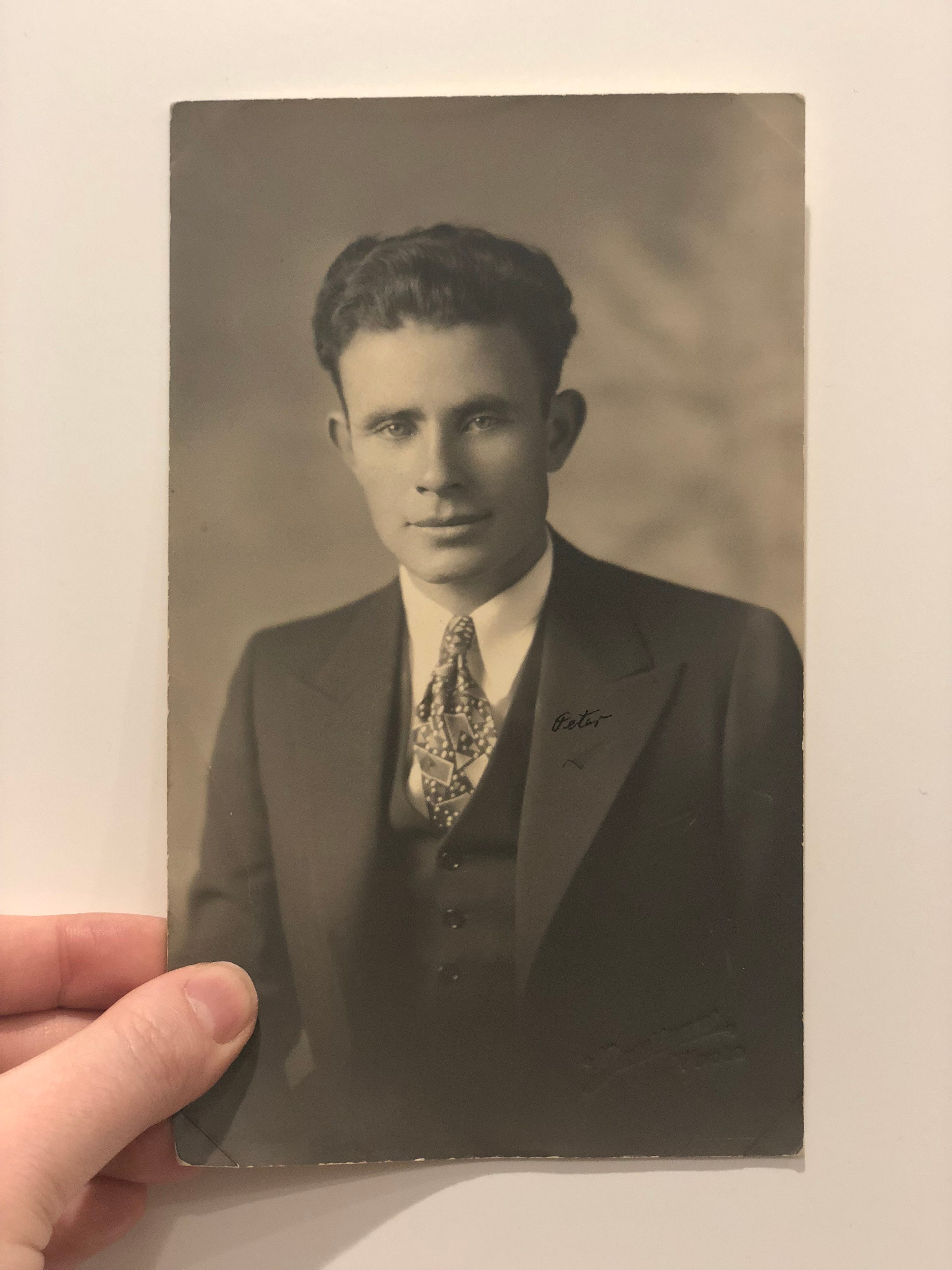
In spite of me growing up primarily in America, my parents had all three of their children in England. We lived in a house adjacent to my maternal grandparent’s home, next to my aunt and uncle’s house. The portrait above the fireplace in our house there was of the Golden Gate Bridge (for those asking).
My English grandfather was a gregarious character who loved throwing parties and playing the piano and tinkering with antique clocks. He wore mismatched socks on purpose and upholstered the furniture in his living room himself and whistled when he hoovered. His name was also Courtney, because I was due on his birthday and born the day before.
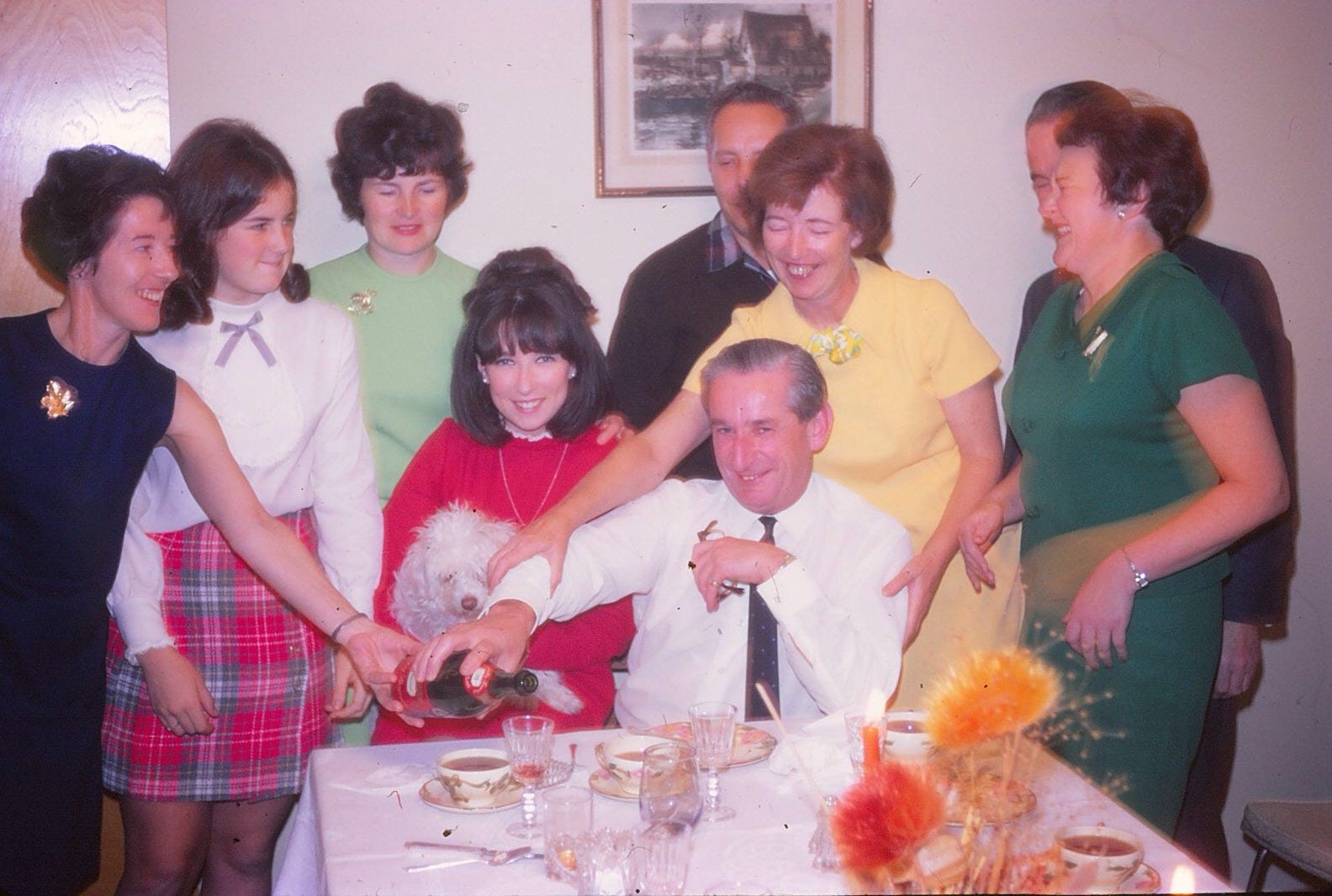
My Irish grandmother looked after me and my cousins during the day while all of our parents worked. She wasn’t Nana or Granny or Mamó, the Irish word for grandma, because that made her feel too old. So she was Betty. Until the day she died at the age of 97, she was Betty.
Betty cried when she laughed, said “God bless” at the end of every phone call and refused to spend more than £3 on any given bottle of wine. I caught her in the kitchen on multiple occasions squeezing the aluminum bag of boxed wine into her priceless Waterford crystal decanters. She once asked my 6’3 friend if he had to take his feet off before he went to bed, and though she’d long ago given up smoking, she always held her first two fingers out when holding a glass of champagne.
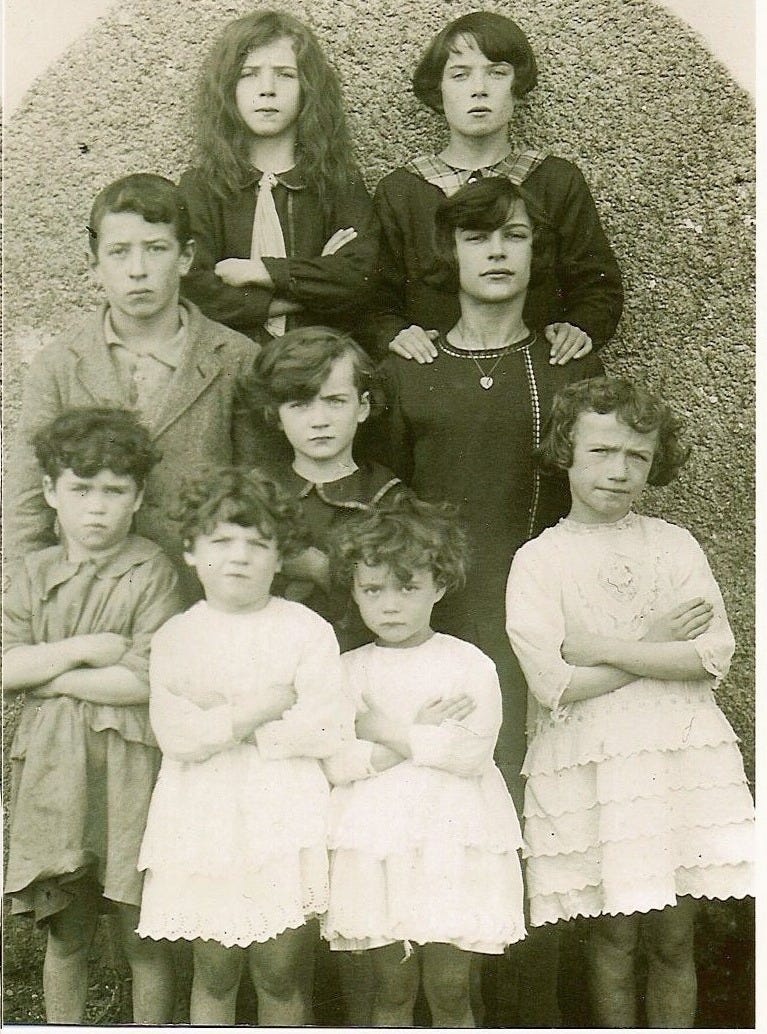
Betty grew up one of 13 children on a farm. She was from County Mayo—which funnily enough was the same county my paternal grandfather was from—but moved to the UK as a young woman to study nursing. Though she never went home after emigrating, Betty somehow became more and more proud to be Irish as each year passed.
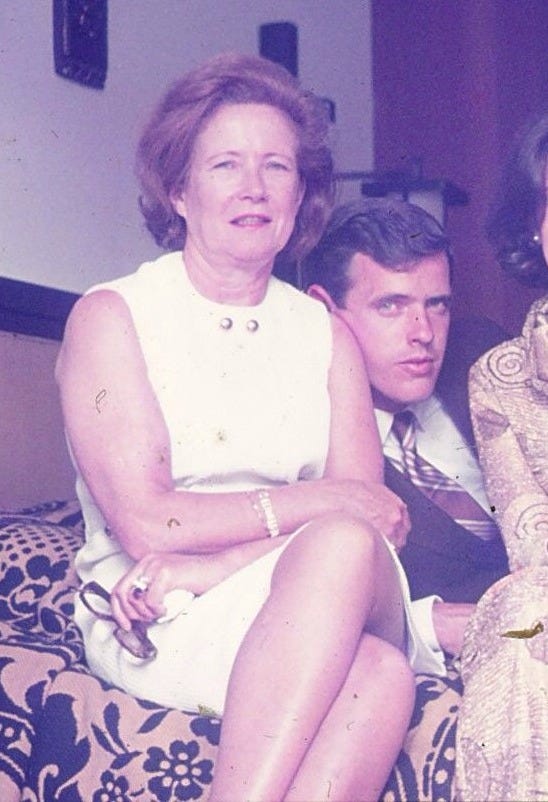
When my family moved to America, our English family were no longer a walk across the garden and my only access to Irish culture was my extended Irish American family on my mother’s side—a version of Irishness very much filtered through the diasporic American experience.

When I was a student studying creative writing at university, I was lucky enough to meet British poet Thom Gunn. Upon hearing I was English and Irish he gave me the surprising response of “oh how interesting that must be, all that blood fighting itself.” He offered the names of many of his favorite Irish writers like a sherpa ushering me up a mountain of my own unfamiliar heritage. As often happens, books became a lifeline to a culture I didn’t otherwise have direct access to.
Of course it didn’t hurt that at roughly the same time I had an unflappable crush on a neighborhood Irish bartender named Ruben. Ruben would yell my name every time I walked in the door (like I was Norm from Cheers) and put a stack of quarters on the bar top so I could put our favorite songs on the jukebox. He was charming and funny and told me all about his life and Ireland. And also his girlfriend. One day she came in to see him and I realized only then that though he lovingly looked at me when we spoke as friends, it was nothing compared to the way he looked at her.
My journey towards loving Ireland and the Irish happened when I finally went to Ireland myself. My mother and I went to mass in a small town we were passing through and when the priest noticed our unfamiliar faces, he wrapped mass up in 30 minutes—practically throwing the holy communion at everyone like mini frisbees—and stood us at the door so that his congregation could say their hellos and hear our life stories as they left. People invited us over for tea, gave us heartfelt blessings, and flooded us with warm welcomes. When we were finally able to break free of the priest and his flock, my mother approached a man outside smoking a cigarette and reading a paper as he leaned against a taxi.
“Are you free?” my mother asked him.
“I’m not free,” he replied, “but I am available.”
I saw firsthand that the Irish were warm and inviting. Their country is every shade of green and filled with storytellers who also want to hear yours. I learned that real Irish goodbyes are not the kind where you leave unannounced without saying goodbye (though I do love those) but the kind that take an extra 45 minutes and include 20 more updates before finally making it to the door.
I love the Irish obsession with funerals, their self deprecating humor, that their literature is dark. I love those Irish kids who wrote a song about being awesome and I love watching men in short shorts push their way into a group hug (some might call it rugby). I love the many ways the Irish prepare potatoes and I love Irish butter so much that when my son saw Meghan’s last name Butler for the first time, he misread it as Butter and said “ha! No wonder you two are friends.”
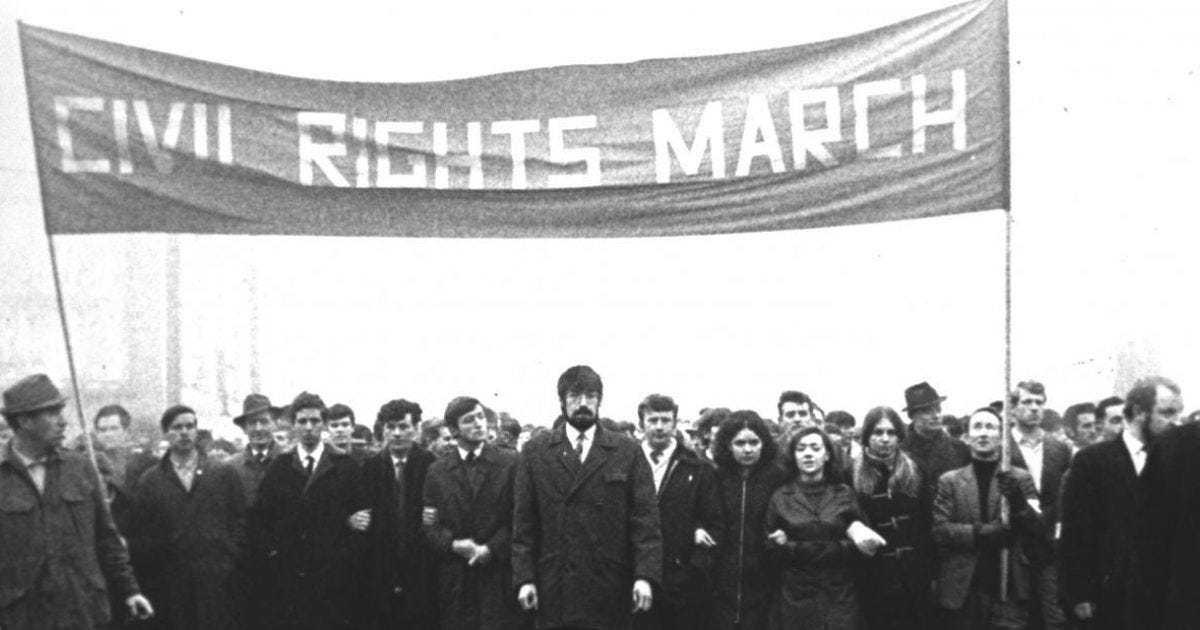
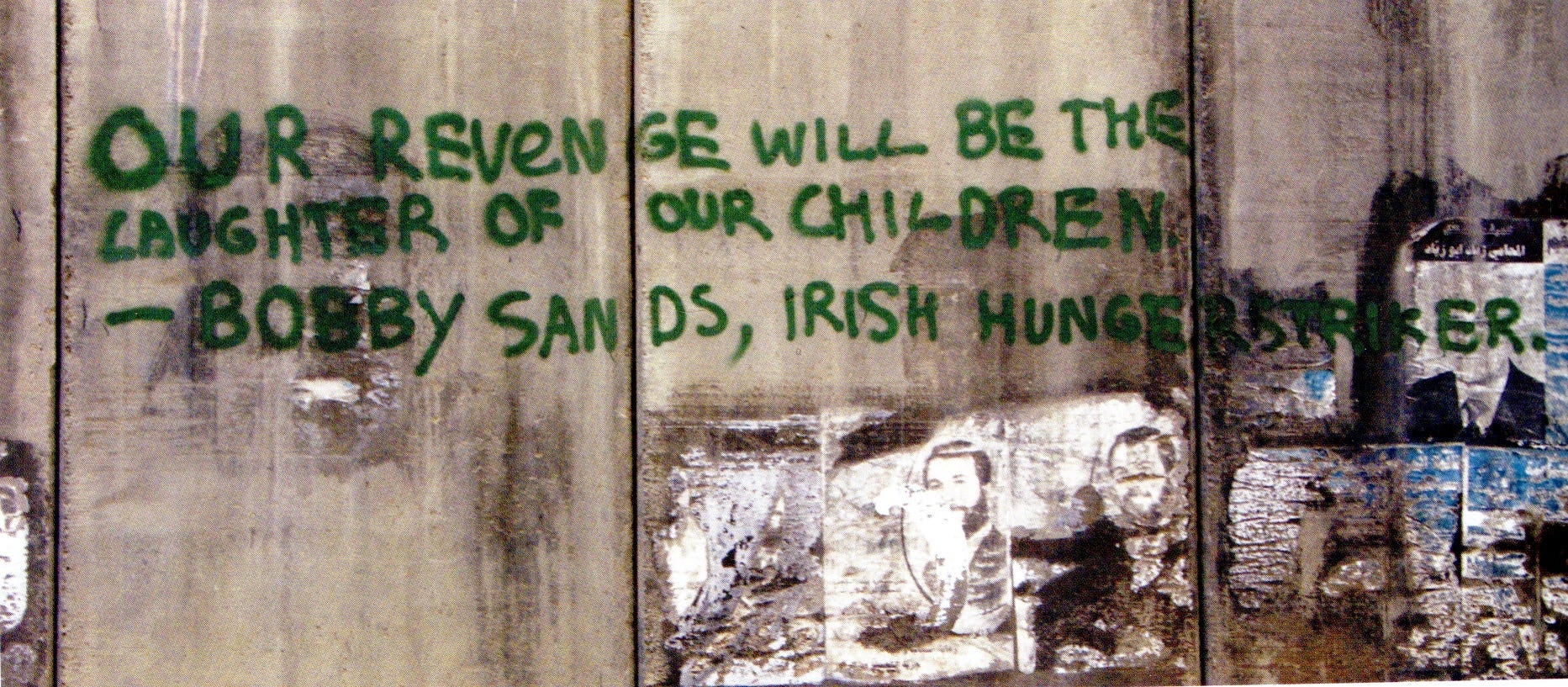
It’s not just the joys of the Irish that I love but the resilience of a people that survived 800 years of colonization and continuously use their struggle to connect to the struggle of others. I love that when fighting against British colonialism in Northern Ireland during The Troubles, the Irish were inspired by Black Americans and the Civil Rights Movement. I love that when Bernadette Devlin, a civil rights activist and MP from County Tyrone, was given the key to New York City in front of a mostly Irish American crowd, she turned around and gave it to the Black Panthers before being banned from returning to the States. I love seeing Saoirse Don Phalaistin stenciled on a wall in Derry and reading a quote from Irish political prisoner Bobby Sands on a wall in the West Bank.
The more I understand about the Irish, the more I can make sense of all of the components that make me whole—the more I can understand all of this blood, fighting itself.
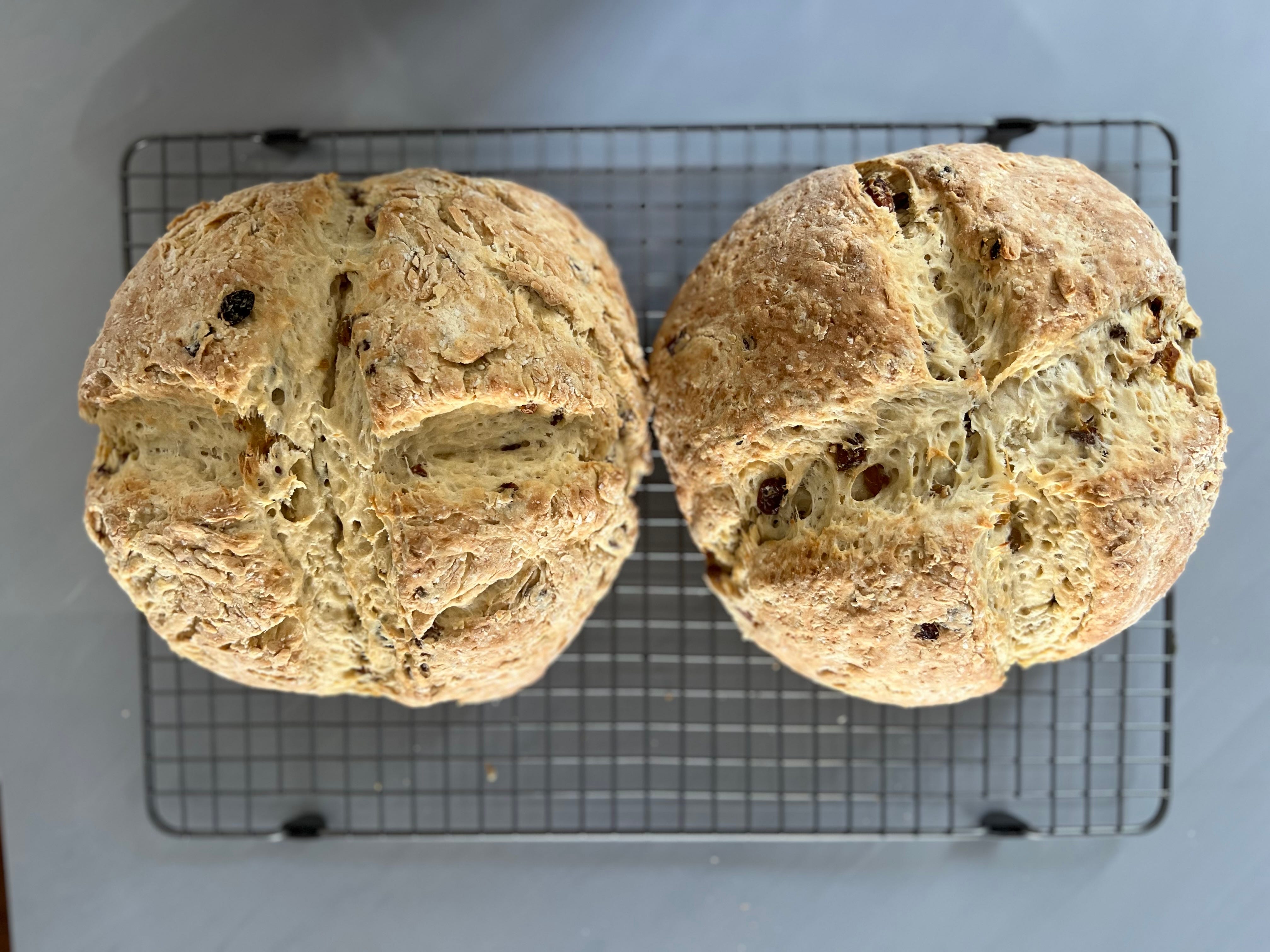
I never celebrated St. Patrick’s Day growing up. Now I have two children with very Irish names who help me make soda bread for their classmates to celebrate the day. Every year we eat far too many slices with thick layers of Kerrygold lathered on top. The traditions are few but they’re good and they’re ours and we love them.
So today we will be rolling up our sleeves and sifting our flour to make traditional Irish soda bread using this recipe from Irish organic farm and cooking school Ballymaloe, and a more traditionally Irish American-style soda bread that the kids love (read: there’s sugar in it), the recipe for which you can find here. On a day where everyone is welcome to be even just a wee bit Irish if they want to be, I invite you to join me.
Happy reading. Happy baking. Happy St. Patrick’s Day.
Courtney
X
Irish Book Recommendations
It’s the Golden Age of Irish literary fiction and we are just living in it.
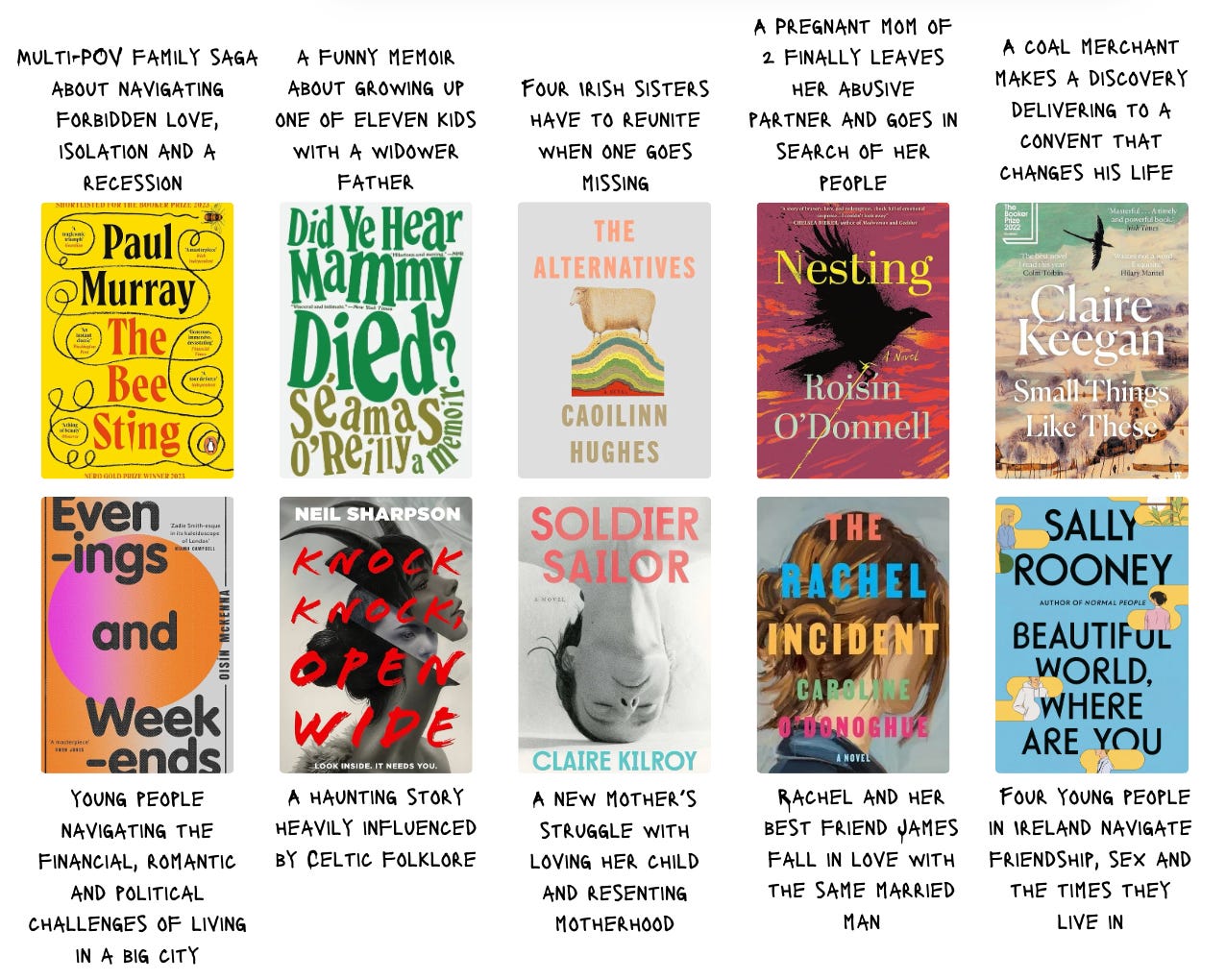
To buy or read more, click here.
For Meghan’s cairn of Irish books, check out her post are you my mother[land].
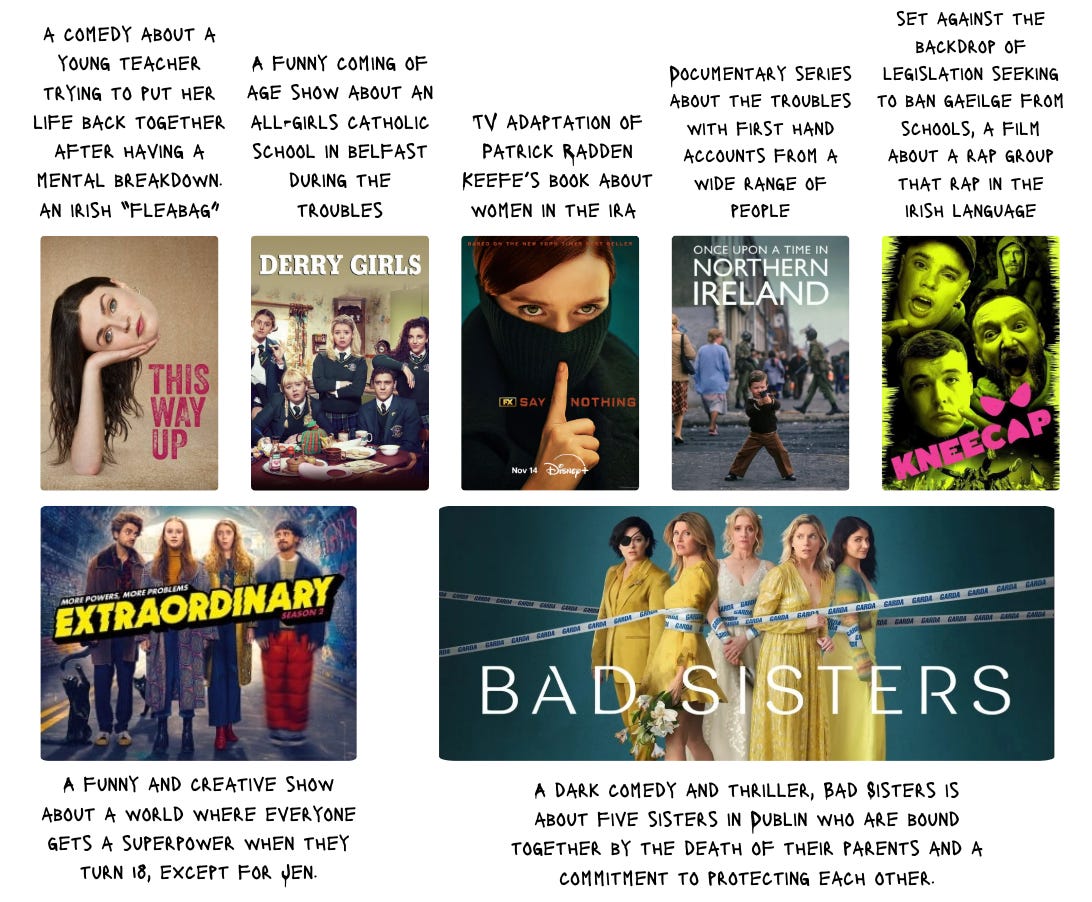
Irish TV & Film Recommendations*
*available in the US
Red coats